


Successful Innovations & Collaborations
Added Value by Integrating Multiphysics Simulation
Optimization of Cooling Lines
Material selection and characterization according to OEM specifications. Based on manufacturer requirements: air temperature, mass flow rate, and external environment.
Optimization of material selection through CFD simulation (fluid and thermal). Precise evaluation of the actual temperature on the cooling line.
Temperature: a key criterion for material selection. Beyond certain thermal thresholds, the use of higher-performance and more expensive materials is mandatory.
Thermal and fluidic problem-solving: Analysis of hot spots, risk areas, and pressure drops in the line. Evaluation of fluid temperatures at inlet and outlet.
Analysis of the thermal behavior of cooling lines for electric or thermal vehicles.
Alignment of input specifications with real-world conditions. Optimization of test protocols to reflect usage scenarios and real-life conditions.
Weight reduction and functional integration: optimization of pipe thickness and design. Integration of OEM constraints (space, cost, thermal performance).
Evaluation of trends and risks based on vehicle use cases. Extreme scenarios (cold, heat, mountain, highway) or reusing the same part for another vehicle.
Use of multiphysics simulation (CFD + DOE) to ensure success. Coupling of mechanical, thermal, and fluidic analyses. Validation of designs through DOE (Design of Experiments).
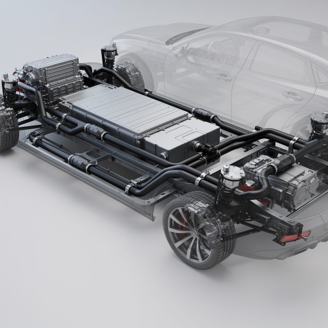
(AI illustration)
Subscribe to our newsletter
Sign up to receive the latest updates, news, and tips.